What Lunio found about LinkedIn’s invalid traffic rate
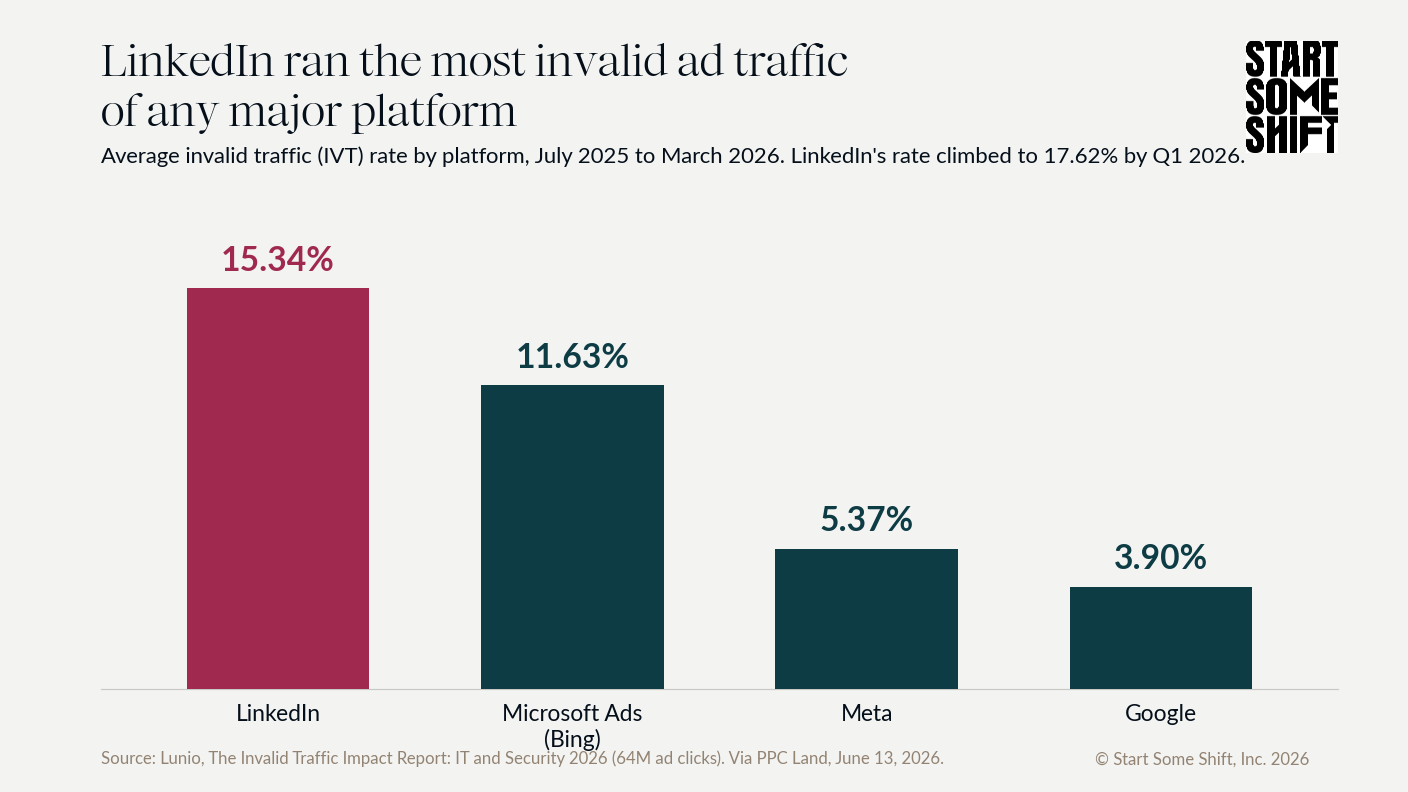
LinkedIn had the highest invalid traffic rate of any major ad platform in early 2026. A new study from the fraud-detection firm Lunio tracked 64 million ad clicks. It found that 17.62% of LinkedIn clicks in the first quarter of 2026 were invalid. That is the worst platform-level rate anywhere in the data.
The Lunio invalid traffic report by the numbers
Invalid traffic means any click that does not come from a real person with real intent. It covers bots, accidental clicks, and clicks made to drain a rival’s budget.
Lunio ran the analysis over nine months, from July 2025 through March 2026. LinkedIn averaged a 15.34% invalid rate across that span. The rate rose every quarter: 13.00% in Q3 2025, 15.40% in Q4 2025, and 17.62% in Q1 2026.
The other platforms scored lower. Microsoft Ads (Bing) averaged 11.63%, reaching 12.04% in Q1. Meta averaged 5.37%, but nearly doubled to 6.64% by Q1. Google had the lowest blended rate at 3.90%.
Two things make LinkedIn’s number sting more. Its cost per click runs about $10 to $15 for B2B advertisers, so each wasted click costs more than on any other channel. And its Lead Gen Forms get exploited by bots that submit fake contact details. Those junk leads look real and flood advertiser CRMs.
Who reported the LinkedIn bot-click data
The findings come from Lunio’s “Invalid Traffic Impact Report: IT and Security 2026.” The trade publication PPC Land covered the report on June 13, 2026. Lunio collected the data from client accounts running in monitor-only mode, so it tracked invalid clicks without blocking them. Lunio CEO Nick Morley said in the report that “every fake click isn’t just wasted budget, it’s a corrupted data signal that pulls campaigns further from genuine buyers.”
How LinkedIn ad fraud fits B2B’s 2026 spending picture
LinkedIn remains the default paid channel for B2B. It drew 41% of B2B ad budgets and delivered a reported 121% return on ad spend in 2025. Those returns are real. The Lunio data just says a slice of that spend never reaches a buyer.
This lands as paid costs keep climbing. Gartner’s 2026 read on where CMOs put their media money shows budgets squeezed toward awareness and conversion. New benchmark work like the TripleDart 2026 SaaS PPC report shows teams paying more to win each lead. Wasted clicks make that math worse. They also corrupt the data that bidding algorithms learn from, so the system optimizes toward fake activity. Buyers, meanwhile, already distrust traditional marketing, which raises the bar for every paid impression.
Talking Shift: why owned credibility outscores polluted paid signals
Here is the Start Some Shift read. When a large share of paid clicks is fake, the channel still charges you full price for them. You cannot fully trust the click, the lead, or the bidding signal built on top. So the smart hedge is to build prominence you own and a brand buyers recognize before they ever click.
A buyer who already knows and trusts you does not need a paid click to find you. Start Some Shift puts it this way: “When the click cannot be trusted, you have to win the buyer before the click ever happens.” Paid still has a place. It just cannot be the whole plan when the meter runs on bots.
What B2B marketers should do about LinkedIn invalid traffic
Treat the Lunio data as a prompt to tighten your paid setup. Your LinkedIn ad also sits in a crowded feed next to direct competitors, so give buyers a clear reason to pick you.
- Audit your LinkedIn Lead Gen Form leads for fake or junk entries before they reach your CRM.
- Turn off audience network expansion to cut exposure to low-quality off-platform inventory.
- Track your invalid-traffic rate with independent verification, since platform reports miss the hardest cases.
- Score and clean leads before sales follows up, so junk does not waste rep time.
- Sharpen your ad creative and offer so your placement wins the click over nearby rivals.
- Shift some budget toward owned channels and content that build recognition.
- Compare cost per real, qualified lead across channels, not cost per click.
What to watch next on ad fraud and LinkedIn
Watch whether LinkedIn adds IP-level reporting or click-quality tools, which it still lacks. Watch the Q2 2026 numbers to see if the rate climbs past 17.62%. And watch how bidding algorithms hold up as AI makes fake clicks cheaper to produce.