
In this article, I cover what every B2B business owner needs to do about this shift before the quarter is already lost.
- How will Google’s new Intelligent Search Box impact your business?
- What the AI actually rewards
- What the brands getting this right are actually doing
- What to do about Intelligent Search Box, before the quarter is already lost
Google just announced a change to Google Search that will have a profound impact on your business.

I stood on a stage, just last month, and warned of this very thing. In my keynote, I told the room they needed to be prepared for the next evolution in marketing, one where machines are the first buyer. I walked them through what the new funnel actually looks like. I told them the search box they had been optimizing for, the one that has barely changed in a generation, was about to become something else entirely.
Four weeks later, Google made it official.
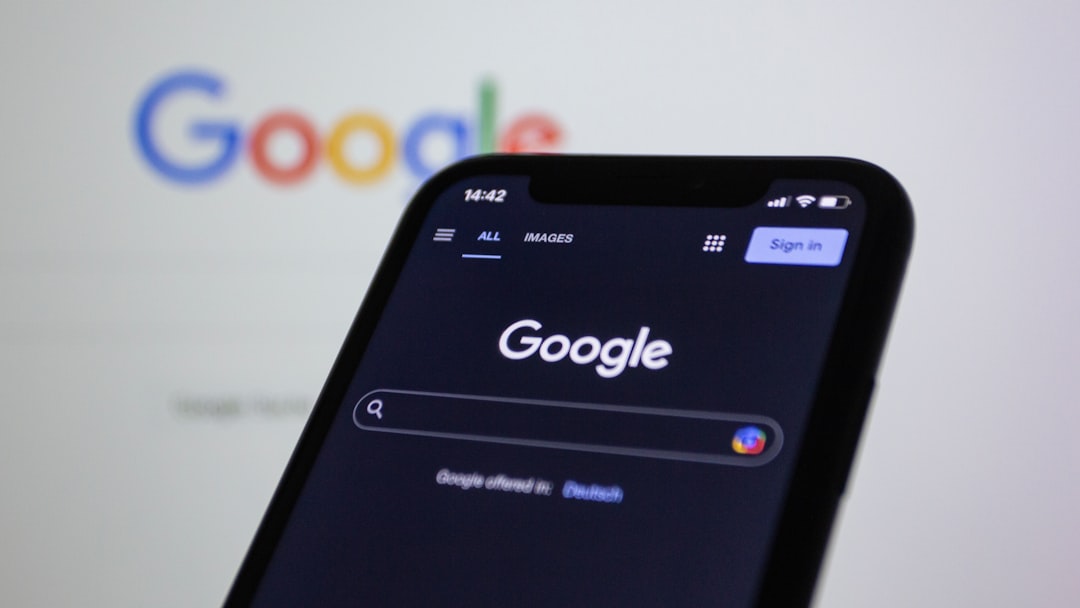
On May 19, 2026, at Google I/O, the company unveiled what its VP of Search Elizabeth Reid called the biggest upgrade to the Search box in over 25 years. Not a new feature. Not a tab. The box itself now become an Intelligent Search Box. Rebuilt on Gemini 3.5 Flash, it now expands to fit long conversational queries, accepts text, images, files, videos, even open Chrome tabs as input. A new mode called Spark runs autonomously in the background, even when your laptop is closed. Users can deploy personal search agents that monitor topics on their behalf, continuously, over time. Reid put the company’s intent in a sentence that should be taped to every B2B business owner’s wall: “Google search is AI search through and through.”
The headline most outlets ran was that Google had reinvented its search box. The actual story is that Google reinvented the buyer.
How will the Intelligent Search Box change your business?
The behaviour shifts from a human looking for a website to a human asking an AI what it recommends. Your future customer no longer scans ten blue links and decides for themselves who looks credible. The AI scans the web for them, synthesizes what it finds, and produces a shortlist of two or three names. The customer picks from what they’re given.
You are no longer being chosen on your website. You are being chosen on whether the machine puts you on the list at all.
This is the moment I’ve been preparing clients for, and it is not a marketing problem. It is a structural one. The first decision-maker in your sales funnel is no longer a person. It is a model. A model that has read everything published about your category, weighed the consistency of how your brand shows up across sources, and decided, before any human is even involved, whether you are credible enough to recommend.
We call this the Binary Buyer Era, and it sits on a premise most B2B businesses still haven’t accepted. You now have two buyers, not one. A machine that finds you. A human that chooses you. Both have to be designed for, deliberately, or the pipeline starts thinning in ways that don’t show up in the dashboard until the quarter is already lost.
This is not a future-state problem. It is already here.
The adoption numbers tell you exactly how fast the floor is moving.
Google reported at I/O that AI Mode has surpassed one billion monthly users in twelve months. Queries inside AI Mode are more than doubling every quarter since launch. The average AI Mode query is three times longer than a conventional search query, because users are asking the kinds of detailed, context-rich questions they used to ask a person. Total Google search volume hit an all-time high last quarter. People are searching more than they ever have in human history.
And yet website traffic is dropping.
That is the paradox that defines the moment, and it is not a temporary blip. More volume, less traffic. Google’s pie is growing. The websites the search results used to point to are not necessarily benefiting. The clicks are being absorbed inside the AI answer.
The B2B numbers underneath this shift are sharper still. According to a 2026 multi-source analysis from Loganix, 73 percent of B2B buyers are now using AI tools during purchase research. AI search converts at 5.1 times the rate of Google organic. And here is the part that should make any business owner sit up: 78 percent of marketers have no strategy for AI visibility. 64 percent are unsure how to even measure AI search success. Only 25.7 percent are developing content specifically to be cited by AI.
The buyers have moved. Most businesses have not.
There is a small window open right now where being deliberate about AI visibility is a category-defining advantage, because almost no one in your competitive set is doing it on purpose. By next year, the window will be smaller. By the year after that, the businesses that didn’t move early will be paying premium rates to win back ground they used to own for free.
What the machine actually rewards
Here is where most of the conversation about AI search marketing goes sideways. The advice you’ll see flying around LinkedIn right now is some version of “write more content” or “publish FAQs” or “answer questions clearly.” Useful, but small. None of it explains the actual mechanism behind how AI models decide who to cite.
The research on this is unusually clean. A study published by Yext in late 2025 analyzed 6.8 million AI citations across ChatGPT, Gemini, and Perplexity. The headline finding: 86 percent of AI citations come from sources brands already control or influence. First-party websites generated 44 percent of citations. Brand listings another 42 percent. Reviews and social, 8 percent. Forums like Reddit, which were assumed to be the secret door to AI visibility, accounted for just 2 percent once location and intent were applied.
That tells you owned sources matter enormously. But the second finding, from Loganix’s 2026 analysis, is the one that should reorganize your priorities. Brand web mentions correlate with AI citation rates at roughly three times the strength of backlinks. Three times. Decades of SEO orthodoxy built the entire industry around link acquisition. The new game runs on something different. The new game runs on whether your brand name shows up, consistently, across the web, with the same shape and the same meaning, regardless of whether you put it there.
That is the machine’s currency. Consistency. Extractability. The same brand showing up in the same way across owned, earned, and uncontrolled sources. The model doesn’t trust you because you have a beautiful website. The model trusts you because every time it encounters your name, the description holds.
This is what most B2B businesses get wrong about Google AI search marketing. They treat it as a publishing problem when it is actually a positioning problem. You cannot extract a position the brand never put down clearly in the first place. You cannot build consistency across sources when the brand doesn’t speak with a single voice across its own. The machine is not failing to find you. The machine is finding you and concluding that the signal is too noisy to recommend.
What the brands getting this right are actually doing
There are real examples already in the market of B2B brands engineering for the Binary Buyer Era, and they are not the ones you’d expect.
Qualtrics spent years rebranding the category they operated in from “data” to “experience management.” It looked like a marketing exercise. It was structural. By renaming the category, they made themselves the source the entire conversation pointed to. When an AI model is asked today to recommend a tool for experience management, Qualtrics is statistically embedded in the answer because the language itself is theirs. The mechanism is positioning that earns category gravity. Every time a customer, an analyst, or a competitor says “experience management,” they are training the model to point at Qualtrics.
Gong did something parallel for revenue intelligence. They didn’t just sell call recording software. They published research, named the practice, and got their concept (“revenue intelligence”) repeated by their customers and partners in earned media. The brand mentions stacked up across podcasts, reviews, and analyst coverage in a way that made Gong the most extractable answer to a question their category didn’t even have a name for five years ago. The mechanism is the same as Qualtrics: own the language, get the citations.
Cognism in the B2B data space has built a third version of the same play. Their content strategy is structurally engineered for extractability. Definitions are short and clean. Brand mentions are consistent across every owned source. Their executives show up on industry podcasts using identical phrasing about the category. By the time a buyer asks an AI for the best B2B data provider, the model has been fed a stable, consistent version of Cognism’s brand from a dozen directions. It cites them because there is no ambiguity to resolve.
The mechanism in all three cases is the same. It is not about being loud. It is about being legible. It is about giving the machine a signal so consistent and so extractable that recommending you becomes the path of least resistance.
That is what Google AI search marketing actually demands. Not more content. Sharper positioning. Not louder marketing. More consistent brand. Not better SEO. A brand the machine can confidently quote, because every source it checks tells it the same story.
What do you need to do before the quarter is already lost
If you are running a B2B business right now, the cost of waiting is not theoretical. Every month the machine is being trained on what the web says about your category. If that data set doesn’t contain a consistent, extractable version of your brand, the model is building a recommendation logic that does not include you. That logic compounds. By the time you decide to act, your competitor’s name has been cited ten thousand times in answers you were never even considered for.
The companies that win the next decade will not be the ones with the best website. They’ll be the ones the machines already trust enough to recommend.
If you want to see where you sit in the new search, I built a 16-question diagnostic that scores you against both rings of the Binary Branding Framework, the machine ring and the human ring. It takes about ten minutes. You’ll know within an hour whether your brand is one a machine can find, and a human will choose.
The search box just got bigger. The shortlist just got smaller. Make sure you’re on it.
Do you like this post?
Ready to explore if your brand is ready for this new era?
Take the 16-question Binary Buyer Audit and find out how you rank for both machine and human search.
Frequently asked questions
What is Google AI search marketing?
Google AI search marketing is the discipline of making your brand findable, citable, and recommendable by Google’s AI-powered search experiences, including AI Mode, AI Overviews, and the new intelligent Search box launched at Google I/O 2026. Unlike traditional SEO, which optimizes for human readers scanning blue links, AI search marketing optimizes for how generative models extract, weigh, and cite brand information when building answers and shortlists for users.
How is Google AI search different from regular Google search?
Regular Google search returns ten ranked links and lets the user choose. Google’s AI-powered search synthesizes information from across the web, builds a direct answer, and surfaces a short list of recommended sources. The user often never clicks through. The behaviour shifts from human selection to machine recommendation, which means brands must now be designed for two buyers: the machine that finds you and the human that chooses you.
What is included in a fractional CMO retainer?
Typical fractional CMO retainers cover strategic planning, team leadership, campaign oversight, executive reporting, and quarterly KPI accountability. They typically do not cover ad spend, agency fees, content production, or paid media — those remain separate line items. The retainer pays for the leadership, not the execution.
Is SEO dead because of Google AI search?
SEO is not dead, but its role has changed. Traditional SEO ranking factors like crawlability, structured content, and backlinks still matter for being indexed. But AI citation is driven by different signals, primarily brand mention consistency across owned, earned, and uncontrolled sources. Brand web mentions correlate with AI citation rates roughly three times more strongly than backlinks, according to 2026 research from Loganix.
What are the biggest ranking factors for AI search visibility?
The strongest predictors of AI citation include: brand search volume, consistency of brand mentions across the web, extractability of your content (clear definitions, structured answers), citation by trusted third-party sources, and presence in brand-managed assets like first-party websites and listings. According to Yext, 86 percent of AI citations come from sources brands already control or influence.
How do I know if my brand is showing up in Google AI search?
The fastest way is to ask the machines directly. Open Google AI Mode, ChatGPT, Perplexity, and Gemini, and ask each one to recommend the top providers in your category. Note whether your brand appears, where it ranks in the answer, and how it is described. If you show up at all, the description should match the positioning you intend. If it doesn’t, the machine has built its own version of your brand from the inconsistent signals it found across the web.The harder question is why you are or aren’t showing up, and what to do about it. That’s the question the Binary Buyer Audit was built to answer. It scores your brand against the six dimensions that determine whether a machine can find you and a human will choose you: Clarity, Consistency, Credibility, Persona, Proof, and Prestige. Take the audit at startsomeshift.com/binary-buyer-audit-tool.
What should B2B brands do first to prepare for Google AI search?
Three moves, in order.
First, audit where your brand sits right now across both rings of the Binary Branding Framework: the machine ring (Clarity, Consistency, Credibility) and the human ring (Persona, Proof, Prestige). You cannot fix what you have not diagnosed. The Binary Buyer Audit gives you a numbered score in about ten minutes.
Second, sharpen your positioning so the machine has a single extractable definition of who you are, who you serve, and why you are the obvious choice. Most B2B brands fail AI search not because they are invisible, but because the signal across their owned and earned sources is too inconsistent for a model to confidently recommend.
Third, identify the category language you want to own and start using it relentlessly across every channel you control, while seeding it into earned media. The brands that win AI search are the ones the machine can quote most confidently because every source it checks tells the same story.